Gas Line Repair & Inspection in Kensington, Brooklyn
Safety testing, code-compliant piping repair, Local Law 152 inspection support, and appliance installations.
When addressing non-emergency gas piping issues, professional gas line repair Kensington Brooklyn property owners depend on requires strict adherence to NYC building codes, pressure testing standards, and licensed trade craftsmanship. Natural gas powers the central steam boilers, hydronic heating loops, hot water tanks, and kitchen ranges that keep Kensington homes running safely. Whether you need remedial piping to clear a utility lock-out, appliance gas connections, or a planned pressure test, our technicians execute precise, code-compliant solutions.
Gas Piping in Older Kensington Residential Buildings
The residential architecture across Kensington features historic Victorian wood-framed homes, brick row dwellings, and multi-family walk-ups along Ocean Parkway and Church Avenue. Many of these structures rely on legacy schedule-40 black steel and threaded malleable iron gas supply lines. Over decades of operation, persistent dampness in unconditioned basements, vibration from heating equipment, or building settling can cause threaded pipe dope to desiccate or pipe wall thickness to degrade.
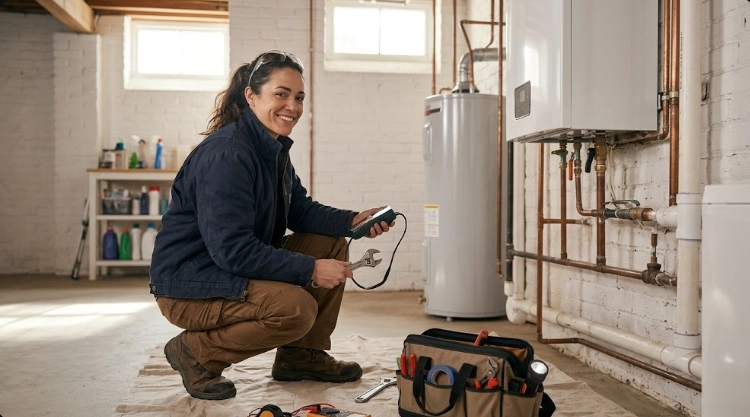
When conducting a thorough gas piping inspection Kensington Brooklyn property managers benefit from our non-destructive electronic gas sniffers and calibrated digital pressure gauges. We isolate individual branch runs to identify hairline joint seepage without unnecessarily disrupting finished partition walls or public hallways.
NYC Local Law 152 Periodic Gas Piping Inspections
Building owners across Brooklyn must comply with New York City Local Law 152 (LL152), which mandates periodic inspections of all exposed gas piping systems. This requirement applies to all buildings containing gas piping, with exemptions specifically limited to single- and two-family private residences categorized under R-3 occupancy.
Mandated inspections must be performed once every four years in accordance with Brooklyn Community District scheduling cycles. The inspection examines all exposed gas piping from the utility service entrance through boiler rooms, cellar distribution headers, public corridors, and tenant laundry rooms. If non-code fittings, atmospheric corrosion, or pressure leaks are identified, property owners receive a formal violation report requiring timely corrective repairs and certified filing to avoid heavy municipal penalties.
Appliance Hookups & Gas Line Installation for Stoves
Beyond corrective repairs, remodeling kitchens or installing commercial-grade heating equipment requires upgrading distribution lines. When scheduling a gas line installation for stove Kensington Brooklyn homeowners must ensure pipe diameters provide adequate BTU capacity. Undersized branch lines starve cooking burners, causing yellow, unstable flames and poor combustion.
Our technicians cut, thread, and secure rigid black iron piping according to NYC Fuel Gas Code standards. Every installation includes certified full-port gas shutoff cocks, approved flexible appliance connectors, and mandatory sediment traps (dirt legs) to prevent rust flakes from fouling sensitive appliance valves.
Diagnostic Pressure Testing & Service Restoration
When a gas utility locks a meter due to suspected micro-leaks, restoring service requires systematic isolation and pressure testing. We seal off all downstream appliance cocks, introduce an inert nitrogen charge, and verify pressure hold on calibrated test gauges over the required observation duration. Once pressure decay is eliminated and repairs pass inspection, we assist with documentation to facilitate utility turn-on, purge air lines, and verify safe boiler and water heater burner ignition.
Frequently Asked Questions
Common questions regarding gas line repair and inspections in Kensington, Brooklyn.
Evacuate the property immediately into outdoor fresh air. Do not touch electrical light switches, operate mobile phones, or light matches inside the premises. From a safe location outdoors, call 911 or the local utility emergency dispatch immediately.
Under NYC Local Law 152, periodic inspections of exposed gas piping are mandatory every four years for all buildings except private single- or two-family homes classified under R-3 occupancy.
Historic buildings in Kensington often feature black iron piping that experiences corrosion from basement moisture, dried pipe dope at threaded joints, building settling stress, or mechanical vibration from nearby heating equipment.