Boiler Repair in Kensington, Brooklyn
Expert diagnostic troubleshooting, emergency safety restoration, and mechanical repairs for steam and hot-water heating systems in Kensington row houses, detached multi-family homes, and residential apartment buildings.
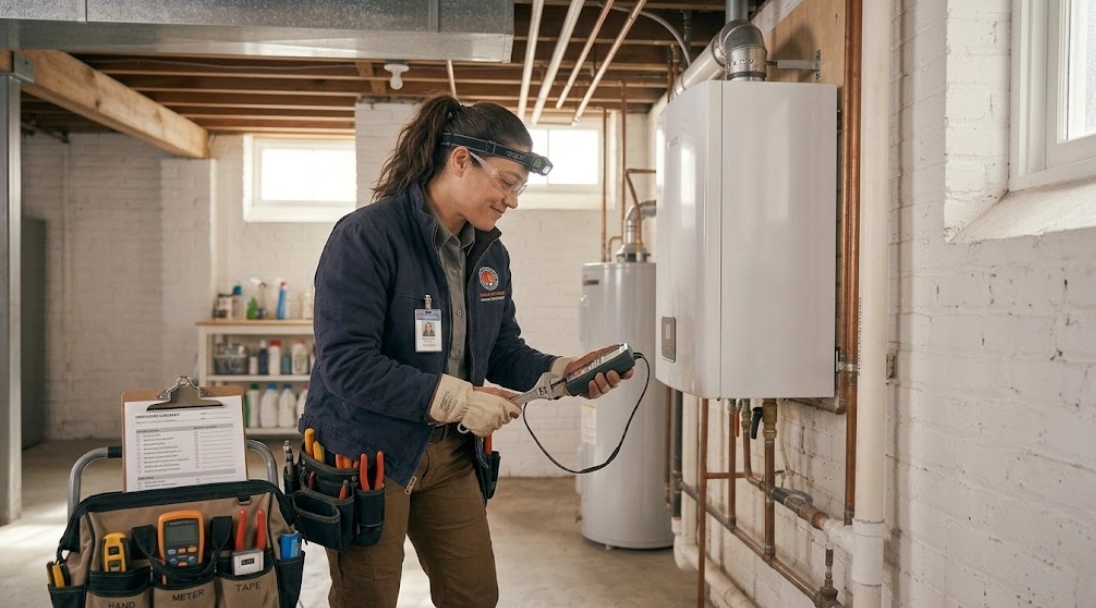
Experiencing Sudden Loss of Heat or Unusual Boiler Behavior?
When freezing winter temperatures grip Brooklyn, a heating shutdown threatens frozen water pipes, cracked radiator castings, and uninhabitable living conditions. If you need prompt no heat boiler repair Kensington Brooklyn property owners can speak directly with our dispatch team at (315) 202-8009. If you ever detect the sulfur odor of natural gas, evacuate the premises immediately and dial 911 or the gas utility from outdoor safety.
Boiler Repair for Kensington Homes and Multi-Family Buildings
Addressing the specific heating architecture of Victorian homes, brick row dwellings, and pre-war apartments.
Kensington, Brooklyn presents one of New York City's most distinctive architectural landscapes. Flanked by historic Ocean Parkway to the east and bordered by Church Avenue and Coney Island Avenue, the neighborhood showcases a rich blend of freestanding Victorian frame houses with wide front porches, stately brick row dwellings, detached two- to six-family residential buildings, and mid-sized pre-war apartment blocks.
Behind the varied facades of these homes lie heating systems that have weathered decades of Brooklyn winters. When seeking dependable boiler repair Kensington Brooklyn property owners and superintendents encounter two primary heating methods: low-pressure steam systems and hydronic hot-water systems. Each heating design operates under entirely different mechanical principles, and accurate troubleshooting requires an in-depth understanding of how these vintage configurations interact with modern boiler controls.
Steam vs. Hydronic Hot-Water Boiler Systems
In historic Kensington properties, low-pressure single-pipe steam systems remain widespread. In a steam heating configuration, the boiler boils water to create steam at pressures between 0.5 and 2.0 PSI. As steam expands, it drives cold air out through radiator air vents and fills heavy cast-iron radiators throughout upper floors. Once steam releases its thermal energy, it condenses back into liquid water and relies on precise pipe pitch to drain through gravity back down to the boiler. When addressing steam boiler repair Kensington Brooklyn technicians must evaluate pressuretrol settings, water level sight glasses, automatic feed valves, and float cutoffs.
Conversely, closed-loop hydronic systems heat water to approximately 180 degrees Fahrenheit without converting it to steam. Electric circulator pumps push this heated fluid through continuous copper or steel loops into baseboards or radiant convectors. When executing hot water boiler repair Kensington Brooklyn specialists inspect expansion tanks, pressure relief valves calibrated to 30 PSI, high-limit aquastats, and multi-zone circulator relays.
Common Warning Signs Requiring Professional Boiler Service
Boiler problems rarely happen without advance warning. Recognizing the initial symptoms of mechanical deterioration enables building owners to schedule repairs before an inconvenient mid-winter breakdown:
- No Heat or Inconsistent Room Temperatures: If your burner fails to ignite or runs without heating radiators, system distribution or limit controls may have tripped.
- Boiler Short-Cycling: When equipment fires for only a minute before abruptly shutting down, an oversized burner, water level imbalance, or improperly calibrated operating control is often responsible.
- Violent Banging and Clanking (Water Hammer): Water hammer occurs when condensed steam cannot return smoothly to the boiler and collides violently with fast-moving steam. This shockwave shakes floor joists and can crack cast-iron fittings.
- Water Accumulation Around the Boiler Base: Puddles around your unit indicate a leaking pressure relief valve, corroded return piping unions, failed tankless coil gaskets, or a fractured heat exchanger.
- Radiators Remaining Stone Cold: When a boiler operates normally but individual radiators stay cold, clogged air vents or airbound hydronic branches prevent heat delivery.
- Unusual Burner Behavior or Yellow Flames: In a gas boiler repair Kensington Brooklyn call, yellow lazy flames, delayed ignition thumps, or soot accumulation signal burner orifice fouling, draft hood backdrafting, or incomplete combustion requiring prompt safety intervention.
Diagnostic and Repair Sequence: What to Expect During a Service Visit
When a heating specialist arrives at your Kensington property, guessing has no place in the workflow. Our diagnostic process follows a disciplined technical sequence:
- Symptom Review & Visual Assessment: We examine operating conditions, evaluate thermostat calls, and inspect the electrical service switch, gas cock valve, and flue draft damper.
- Safety Control Verification: We test the low-water cutoff switch to confirm it cuts burner power during water loss, verify that the pressure relief valve is free of mineral buildup, and test combustion draft.
- Operating Control Testing: For steam boilers, we check the pigtail siphon tube and pressuretrol; for hydronic boilers, we evaluate temperature aquastats, pressure-reducing fill valves, and zone circulator relays.
- Fuel Delivery & Ignition Check: We inspect the electronic ignition module, standing pilot, flame rod sensor, and gas manifold pressure to ensure clean, stable combustion.
- Clear Explanation & Authorized Repairs: Once the root failure is pinpointed, we explain practical repair options and proceed with replacement of defective safety controls, valves, or switches to restore reliable heat.
Repair Versus Replacement: Making the Right Decision
Not every heating problem warrants replacing the boiler. If your cast-iron boiler heat exchanger remains structurally intact and free of water leaks, replacing peripheral components—such as gas control valves, electronic igniters, circulator pumps, or zone controls—can safely extend operational life for many years.
However, when a cast-iron boiler section cracks, water leaks directly into the combustion chamber, or the equipment has surpassed twenty-five to thirty years of continuous service, replacement becomes the safer and more cost-effective choice. If recurring breakdowns require costly mid-winter service year after year, explore our detailed guide to boiler replacement in Kensington for sizing and conversion guidance.
Related Heating and Residential Plumbing Services
Boiler performance is intimately linked with the overall plumbing and piping health of your building. We provide comprehensive service across all related plumbing infrastructure:
- Boiler Replacement: Professional system sizing based on Equivalent Direct Radiation (EDR) and modern high-efficiency heating installations.
- Steam Heat & Radiator Repair: Resolving cold radiators, replacing seized valves, balancing air vents, and eliminating water hammer.
- Water Heater Repair: Diagnostic troubleshooting for leaking water tanks, burner failures, and indirect tanks connected to boilers.
- Gas Line Repair & Inspection: Precision gas piping repairs, pressure testing, Local Law 152 compliance checks, and stove hookups.
- Leak Detection: Non-invasive acoustic tracing and thermal imaging to locate hidden plumbing leaks behind walls and ceilings.
- Drain Cleaning: Heavy mechanical snaking and grease extraction to clear stubborn blockages in older cast-iron drains.
- Sewer Line Repair: High-definition video camera inspections and underground sewer lateral repairs to resolve sewage backups.
Local Service Across Kensington & Adjoining Neighborhoods
Our mobile service vehicles operate across Kensington, from the quiet residential avenues near Ocean Parkway to commercial hubs along Church Avenue and Ditmas Avenue. Whether you require urgent assistance for a boiler not working Kensington Brooklyn home, need boiler repair near Ocean Parkway (north), or manage residential buildings requiring boiler repair near Windsor Terrace or boiler repair near Borough Park, our team delivers focused trade knowledge.
Frequently Asked Questions
Common questions regarding residential boiler repair in Kensington, Brooklyn.
When a boiler fires steadily without warming radiators or baseboards, the issue typically stems from distribution failure rather than burner failure. In steam systems, blocked main line air vents or clogged radiator vents trap cool air, stopping steam from entering heating units. In hydronic systems, seized circulator pumps, airbound pipe loops, or defective zone valve motors prevent heated water from circulating.
Before calling, verify that the thermostat is calling for heat with fresh batteries, ensure the red emergency burner power switch at the basement stairs is switched ON, check the water level in the sight glass on steam boilers, and confirm gas shutoff valves are open. If you ever smell gas, evacuate immediately rather than checking equipment.
Violent banging, known as water hammer, occurs when condensed steam cannot drain freely back to the boiler and collides with incoming high-velocity steam. Over time, the resulting hydraulic shockwaves can crack cast-iron radiator sections, loosen pipe fittings, rupture valves, and fracture boiler heat exchanger castings.
Boiler repair is practical when the cast-iron heat exchanger is physically sound and the fault involves serviceable external controls, such as gas valves, aquastats, low-water cutoffs, or circulator pumps. Replacement is advisable if the heat exchanger is cracked and leaking water, if the unit has surpassed twenty to thirty years of age, or if recurring annual breakdowns approach the cost of a new system.
Have your equipment brand name and approximate age (if listed on the rating plate), whether your home uses steam radiators or hot-water baseboards, specific symptoms (e.g., complete no-heat, banging, leaking water, pilot lockout), and your building layout (single-family, row house, or multi-family).